

Low back pain is one of the most common health problems in the UK and globally.
Roughly 50% of the population will experience low back pain at some point.
For some, it’s a mild annoyance that settles quickly, while for others, it affects their work, life and everyday life.
The good news is that most low back pain is not serious and responds very well to the right approach
What is Low Back Pain?
This is discomfort or stiffness in the area between the bottom of your ribs and the top of the pelvis.
It may be localised to the back or can travel down one or both legs (radicular symptoms)
Symptoms include:
Aching or stiffness in the lower back - especially in the morning
Pain when bending, lifting or sitting
Muscle tightness or spasms
Pain that improves with movement or rest
The term ‘non-specific low back pain’ is often used to describe no serious structural damage causing pain.
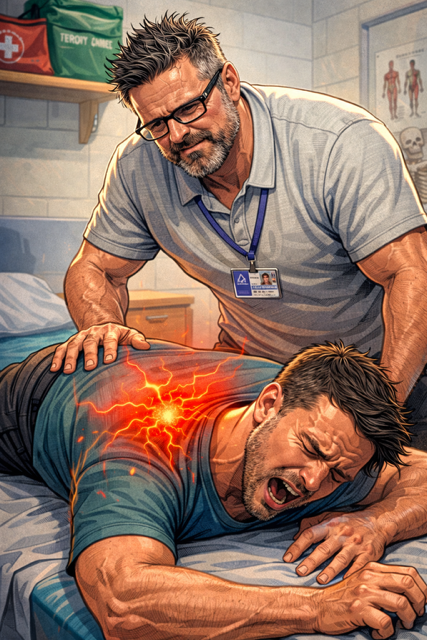
Common Causes of Low Back Pain
Sudden increase in activity - LOAD
Reduced movement - Long periods of inactivity
Muscle and joint irritation - Small strains in the muscles, ligaments, and soft tissue can cause high pain
Stress and fatigue - Psychological stress, poor sleep and fatigue increase pain sensitivity
Poor load management - Increasing weights in the gym to quickly, or doing gardening, lifting.
Do you need a scan?
Most people do not need any X-ray or MRI
Research has demonstrated that 70% of the population have a bulging disc with no pain at all. This does not mean your back is weak or broken but actually normal.
An MRI can sometimes cause a ‘red-herring’, for example. You have low back pain, and go to get an MRI, and it shows a bulging disc. You then assume the bulging disc is the reason for the pain (sometimes it is), but the MRI does not tell you how long you have had this for. Was this normal for you?
Did you just load the back too much? Now you are worried about ‘doing damage anymore,’ so you avoid lifting and exercise.
The pain gets worse as you are now not loading the spine and soft tissue.
When is a scan indicated?
When there are red flag symptoms
Severe trauma
Unexplained weight loss
Shooting pain and/or pins and needles down both legs
Progressive weakness in the legs
Bladder and bowel changes
Numbness around your groin and bottom
What will help me?
Load Management - Learning how to increase training or activity gradually. Sudden spikes in workload are one of the biggest causes of back pain
Strength and Conditioning - Strengthening the muscles around the spine improves spinal resilience and helps prevent future episodes.
Hip strengthening
Core stability
Controlled spinal movement
Gradual return to lifting
Manual Therapy - This can provide some immediate relief to allow you to engage with the exercises and provide reassurance. Manual therapy could include mobilisations, massage, and manual stretching.
When should you see a Physiotherapist?
Pain lasts longer than 2-4 weeks
Pain is limiting your sport, training or activity
Pain keeps returning
You’re unsure how to return to exercise safely
A Physio can assess movement, strength, training load, and diagnose the root cause of the pain and design a personalised rehabilitation plan.
The Bottom Line
Low back pain is very common and rarely serious
In most cases the best approach includes:
Stay active
Gradually build strength
Managing training loads
Avoid unnecessary rest

Author:
Kieron Cronin, MSc, CSP, HCPC
Sports Physiotherapist - specialising in sports injuries, rehab and return to performance